.svg)
Meet our new Māori Systems Innovator, Takoha Ropati
A new voice for kaupapa Māori systems change in Te Taitokerau.
We're excited to officially welcome Takoha Ropati to Healthy Families Far North as our new Māori Systems Innovator.
Takoha comes with strong whakapapa connections to Te Tai Tokerau and experience across kaupapa that matter to our communities – housing, reo revitalisation, sport, and whānau development. His way of working – alongside whānau, hapū and iwi aligns naturally with our kaupapa, and we're looking forward to the perspective and connections he'll bring to the mahi ahead.
We sat down with Takoha to learn a bit more about who he is, what drew him to this kaupapa, and what he hopes to grow alongside us here in the Far North.
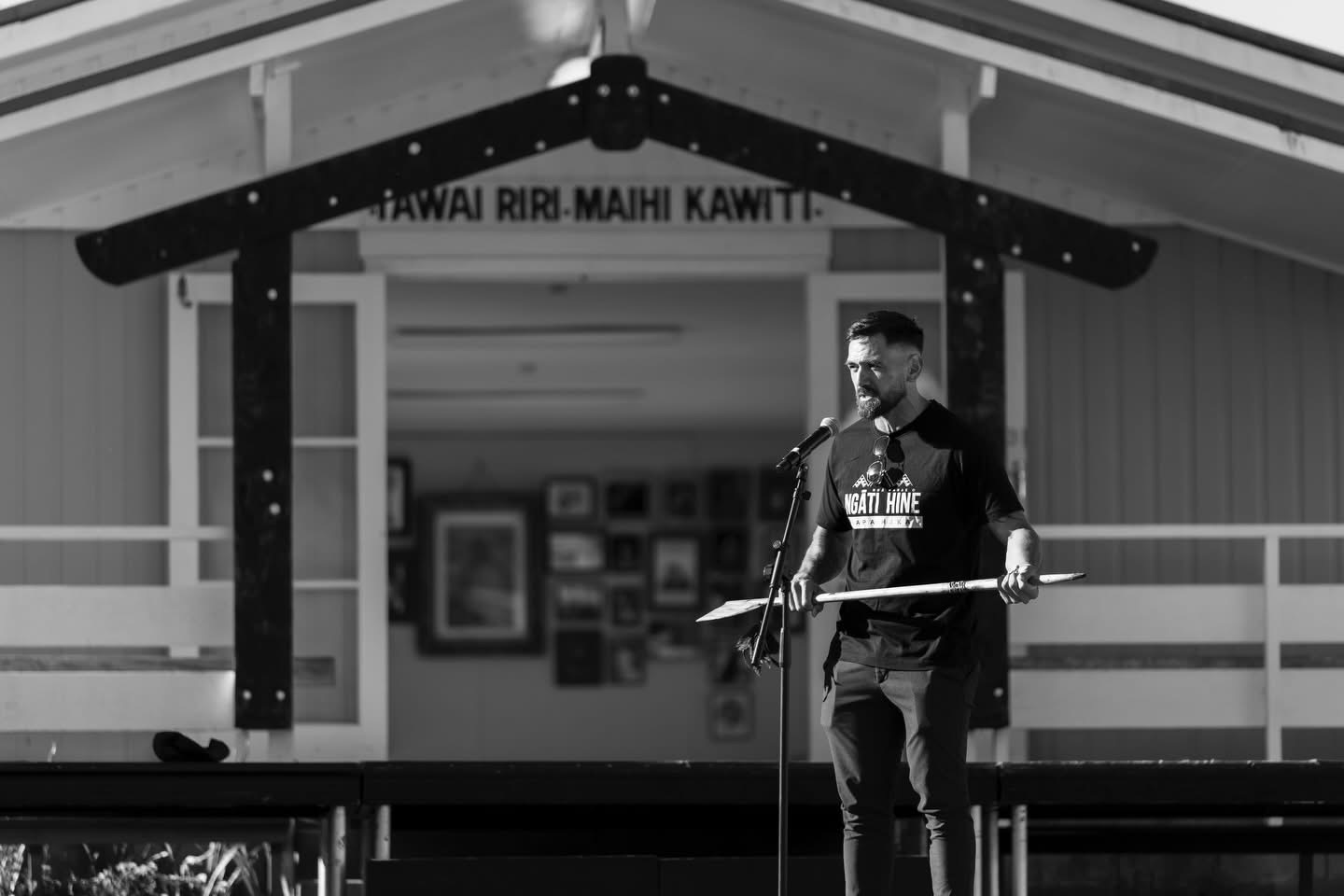
Ko wai koe? Nō hea koe?
He tūkau ahau nō te māra a Hineāmaru, he pātiki nō Tauranga moana, he niu nō ngā moutere o Hāmoa, he raukura nō Te Aho Matua.
Why did you decide to join Healthy Families Far North?
I joined Healthy Families Far North because the kaupapa aligns with how I already work — alongside whānau, hapū and iwi. A lot of the spaces I've been involved in all point to the same thing: the issues we face aren't isolated, they're connected. Healthy Families Far North creates provides the opportunity to work differently – to look at the bigger picture and support long-term, intergenerational change rather than short-term fixes. It felt like a natural extension of the work I was already doing in Te Tai Tokerau.
What does systems change mean to you?
Systems change, to me, is about shifting the conditions that shape outcomes, not just responding to the outcomes themselves. It's moving from helping one whānau into a home, to questioning why access to housing is so difficult in the first place. It's changing policies, mindsets, relationships, and power structures so that our people can thrive as a norm, not as an exception. It also means centering Te Ao Māori – our ways of knowing, being, and doing – so that solutions are built with us, for us, and by us.
What do you hope to do at Healthy Families Far North to affect and create change?
I want to help strengthen the connections between kaupapa that already exist across the region – housing housing, health, reo, sport, whenua, and whānau development – and support them to move as one system instead of in silos. Practically, that looks like elevating whānau voice and lived experience into decision-making spaces, supporting kaupapa Māori solutions to be seen as the standard, not the alternative, using platforms like sport, housing wānanga, and reo initiatives as vehicles for wider wellbeing and influencing how agencies and organisations engage with our people. Ultimately, it's about creating environments where our people don't have to navigate broken systems to succeed.
What is your vision for Te Tai Tokerau?
My vision is a Te Tai Tokerau where our people are grounded in who we are – culturally, spiritually, and collectively – and where our systems reflect that identity. A place where whānau are living on their whenua, in warm, secure homes. Te reo Māori is normalised across homes, kura, sport, and community spaces. Our tamariki and rangatahi can see clear pathways, whether in education, sport, or enterprise. Our environments — physical and social — uplift hauora, not compromise it. Most importantly, where success is defined by us, not by external systems that were never designed for us.
What are you doing in your spare time?
Most of my spare time still sits within kaupapa, just in different forms. I'm heavily involved in sport through Ngāti Hine and E Ngāki Trust, working with our rangatahi and whānau through touch and league. That space is more than just sport, it's about identity, discipline, connection, and leadership. Outside of that, it's time with whānau, staying connected to home, spending time in the taiao — fishing, diving, walking in the ngahere — and continuing to grow in te reo Māori.
.svg)
.webp)